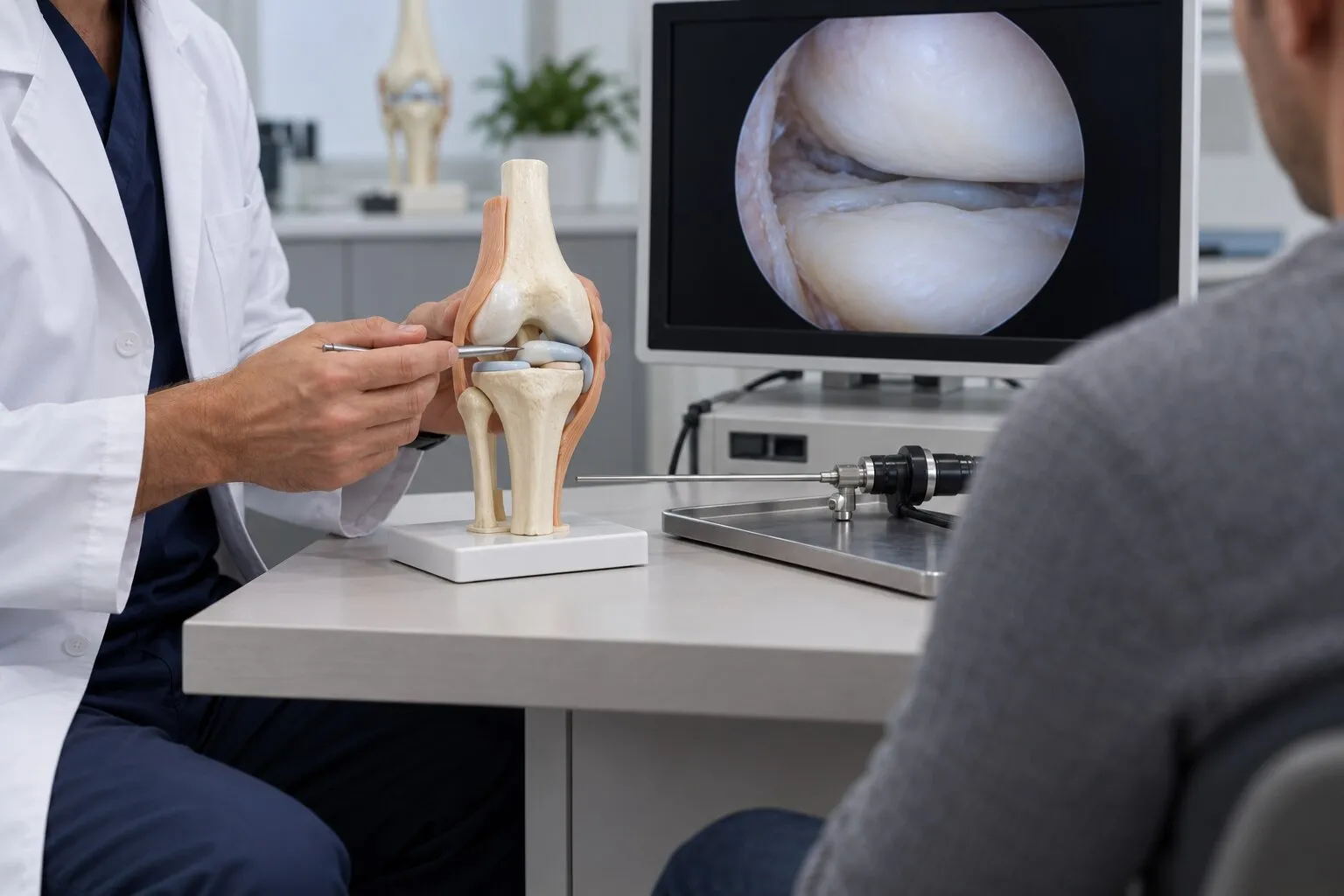
Arthroscopy is not automatically the next step for every painful or swollen joint. Before you agree to it, you should understand how the diagnosis is confirmed, what happens from admission to discharge, which procedure is planned, and what recovery demands it will create.
Key takeaways
- Your examination and symptoms matter as much as MRI findings.
- Arthroscopy may diagnose a joint problem and treat it during one procedure.
- Ask about anaesthesia, weight-bearing limits, physiotherapy and warning signs before discharge.
- Compare a specialist’s experience, hospital access, rehabilitation plan and follow-up care.
How does an orthopaedic specialist decide whether arthroscopy is right for you?
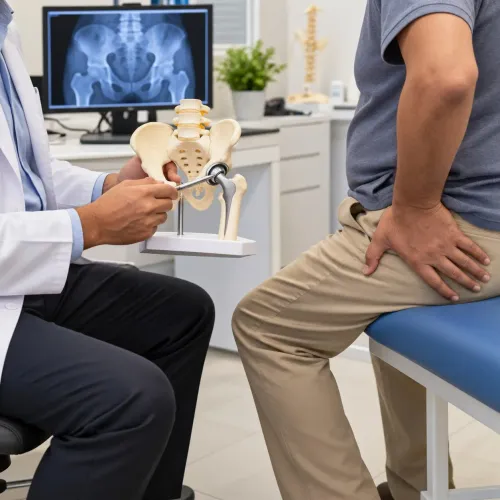
The decision starts with your symptoms, clinical examination and movement testing—not with a scan alone. The specialist checks pain, swelling, instability, locking, tenderness, strength and range of motion, then compares those findings with X-rays, MRI, ultrasound or other tests when needed.
Ask, “What specific structural problem does the imaging show, and how does it match my symptoms?” Arthroscopy is more suitable when there is a treatable mechanical target, such as a repairable meniscal tear, loose body, selected ligament injury, cartilage problem or joint instability.
It is a poor choice when pain mainly comes from advanced osteoarthritis, no clear target exists, an infection is untreated, or another condition makes anaesthesia or surgery unsafe until controlled. Routine arthroscopic washout or debridement does not treat primary knee osteoarthritis.
Other options may include:
- Physiotherapy, activity modification, medication, an injection or observation
- Open surgery when arthroscopy cannot address the problem
- Joint replacement for advanced joint damage
| Option | Best fit | Key point |
|---|---|---|
| Arthroscopy | Treatable mechanical problem | Compare benefit with rehabilitation and surgical risks |
| Non-surgical care | Symptoms without a repairable target | May avoid operative risks |
| Open surgery or joint replacement | Extensive damage or unsuitable anatomy | Recovery and restrictions may be greater |
If you are researching arthroscopy in Pune or an orthopedic specialist arthroscopy in Pune, ask the consultation to compare each option with your examination, imaging and daily goals.
What happens from admission to discharge on the day of arthroscopy?
Before admission, follow the fasting instructions given by the anaesthetist. Disclose every medicine, allergy, medical condition and previous anaesthesia problem. Do not stop blood thinners, antiplatelet medicines or diabetes tablets unless the treating team gives you a specific plan.
1. At admission, staff confirm your identity, diagnosis and consent, mark the operative joint and review the planned procedure. Tell them about infection, heart or lung disease, and any change in your health since consultation.
2. The anaesthetist chooses local, regional or general anaesthesia according to the joint, operation and your health. “Keyhole surgery” still requires proper anaesthesia assessment.
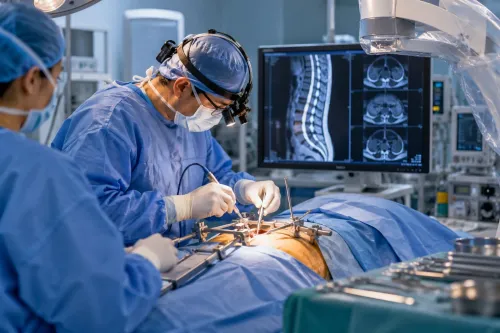
3. After sterile skin preparation and draping, the surgeon makes small portal incisions. A camera-equipped arthroscope enters one portal while sterile fluid expands the joint and improves visibility.
4. The surgeon inspects the joint and inserts instruments through additional portals when treatment is required, such as repairing or removing damaged tissue. Arthroscopy in Pune follows the same basic sequence, although the exact operation differs by joint and diagnosis.
5. The operation may take less than an hour or longer. Timing depends on whether the surgeon is inspecting, repairing, reconstructing or removing tissue.
Many patients leave the same day after recovering from anaesthesia, achieving adequate pain control and walking safely when permitted. An overnight stay may be needed after a longer reconstruction, difficult pain control, protected weight-bearing, medical concerns or a late operation. Arrange an adult to take you home and stay with you as instructed.
What is the difference between diagnostic and operative arthroscopy?
Diagnostic arthroscopy inspects the joint when examination and imaging have not answered an important clinical question. Operative arthroscopy uses the same small portals, camera and sterile fluid to treat a defined problem during the procedure.
| Type | Purpose | Examples |
|---|---|---|
| Diagnostic | Inspect and clarify a problem | Directly assess cartilage, meniscus, ligament or synovial damage when scans remain inconclusive |
| Operative | Treat an identified or confirmed problem | Trim or repair a meniscus, reconstruct an ACL, treat selected cartilage defects, stabilise a joint or remove a loose body |
Before consent, ask whether the plan is inspection only, a named repair, reconstruction or removal. Confirm what additional procedure, or conversion to a different operation, could become necessary if arthroscopy finds more extensive disease than the scans showed or damage that cannot be repaired.
Small incisions do not remove surgical risks. Discuss infection, bleeding or a blood collection, blood clots, nerve or blood-vessel injury, stiffness, persistent pain and anaesthesia complications. A technically successful operation may not eliminate your symptoms.
If your search is “orthopedic specialist arthroscopy in Pune,” ask:
- How does this compare with physiotherapy, injections, medication, open surgery or joint replacement?
- Could you need implants, anchors, screws or suture materials?
- What happens if the intended repair is not possible?
- Who will manage rehabilitation and follow-up?
The answer should match your symptoms, examination and imaging—not the availability of a camera.
What should you expect during recovery after arthroscopy?
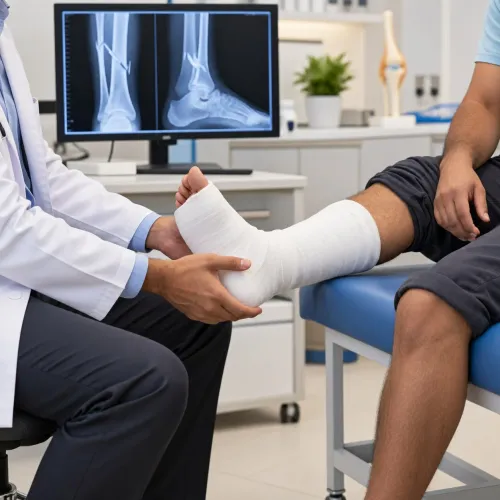
Recovery depends more on the procedure than on the size of the portals. After a partial meniscectomy, progress may be faster; meniscal repair, ACL reconstruction, cartilage treatment and shoulder stabilisation can require a brace, sling, crutches, restricted movement or limited weight-bearing.
1. Expect swelling, bruising, stiffness and pain at first. Elevate the limb, use ice when advised, take prescribed analgesia and follow the exercise or physiotherapy plan supplied by your treating specialist.
2. Ask exactly when you may bathe, climb stairs, drive, return to work, resume sport and put full weight through the limb. Do not drive while taking sedating pain medicine, or when pain, weakness, a brace or restricted movement could prevent emergency braking.
3. Keep the written rehabilitation plan. Appointments, restrictions and milestones vary by joint, procedure and patient factors, even after arthroscopy in Pune.
4. Seek urgent medical advice for fever, spreading redness, wound discharge, worsening uncontrolled pain, new numbness, a cold or pale limb, or a painful swollen calf. Chest pain or breathlessness also requires immediate assessment.
These symptoms require assessment rather than waiting for a routine follow-up. Your treating specialist should also explain wound care, follow-up timing and the point at which exercise intensity or weight-bearing can increase.
How should you choose an arthroscopy specialist or clinic in Pune?
Location and online rankings are convenience factors, not proof of expertise. When comparing an orthopedic clinic near me with an orthopedic doctor near me, verify the doctor’s Maharashtra Medical Council registration number and ask who provides anaesthesia, where surgery occurs, how emergencies are handled and who coordinates physiotherapy.
Ask the orthopedic specialist arthroscopy in Pune listing you are considering to explain:
| Check | What to confirm | Why it matters |
|---|---|---|
| Diagnosis | The named problem and how examination and X-ray or MRI support it | Prevents operating on an incidental scan finding |
| Procedure | The exact repair, reconstruction, trimming or removal planned | “Arthroscopy” alone is not a complete operation name |
| Decision | Expected benefit, alternatives and complication risks | Lets you compare surgery with physiotherapy, medication, injections or observation |
| Recovery | Restrictions, total appointments and rehabilitation demands | Shows the time and effort required after surgery |
Carry X-ray or MRI images, reports, prescriptions, blood-test results, previous operation notes, and a list of allergies and medicines. Ask about implant or suture materials, facility standards, follow-up access, wound review and a clear written estimate.
Confirm the anaesthetist has reviewed diabetes, blood thinners, allergies, heart or lung disease and previous anaesthesia problems. Do not stop medicines without instructions.
Latkar Multi-speciality Clinic is one option to assess with these questions if you want orthopaedic evaluation, surgery planning and rehabilitation coordination in one care pathway. Choose the team that explains the decision and provides a safe plan before, during and after surgery.
Related product
 | Arthroscopy in pune ARTHROSCOPY Arthroscopy of the Knee Joint The arthroscope is a fiber-optic telescope that can be inserted into a joint (commonly the knee, shoulder and ankle) to... |
Frequently asked questions
How does an orthopaedic specialist decide whether arthroscopy is right for you?
The specialist reviews your pain, swelling, locking, instability, tenderness, strength and range of motion, then compares these findings with X-rays, MRI, ultrasound or other tests. Arthroscopy is considered when symptoms and examination findings point to a joint problem that conservative treatment has not resolved or when direct treatment is needed.
What happens from admission to discharge on the day of arthroscopy?
You complete admission checks, consent, medication review and anaesthesia assessment before surgery. The team prepares the joint, performs the procedure through small incisions, monitors you in recovery and gives instructions about pain relief, wound care, walking, exercises and follow-up before discharge.
What is the difference between diagnostic and operative arthroscopy?
Diagnostic arthroscopy uses a camera to inspect the inside of a joint and identify the cause of symptoms. Operative arthroscopy adds treatment through small instruments, such as repairing tissue, removing damaged fragments or smoothing an injured surface.
What should you expect during recovery after arthroscopy?
Expect swelling and soreness at first, followed by a staged return to movement and activity. Your restrictions depend on the procedure: some patients walk quickly, while repairs may require crutches, limited weight-bearing and longer physiotherapy. Follow the prescribed exercises and report increasing redness, fever, severe pain or calf swelling.
How should you choose an arthroscopy specialist or clinic in Pune?
Check the specialist’s relevant joint experience, where surgery is performed, anaesthesia and emergency arrangements, the proposed procedure, total follow-up plan and physiotherapy support. Ask what recovery restrictions apply and seek a clear explanation of alternatives before deciding.
Keywords