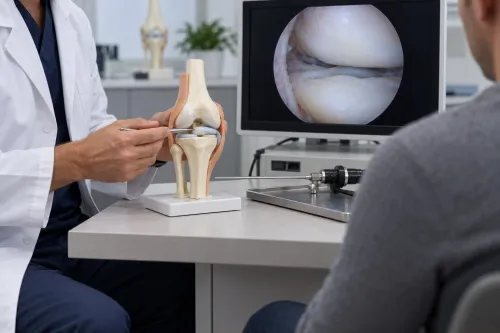
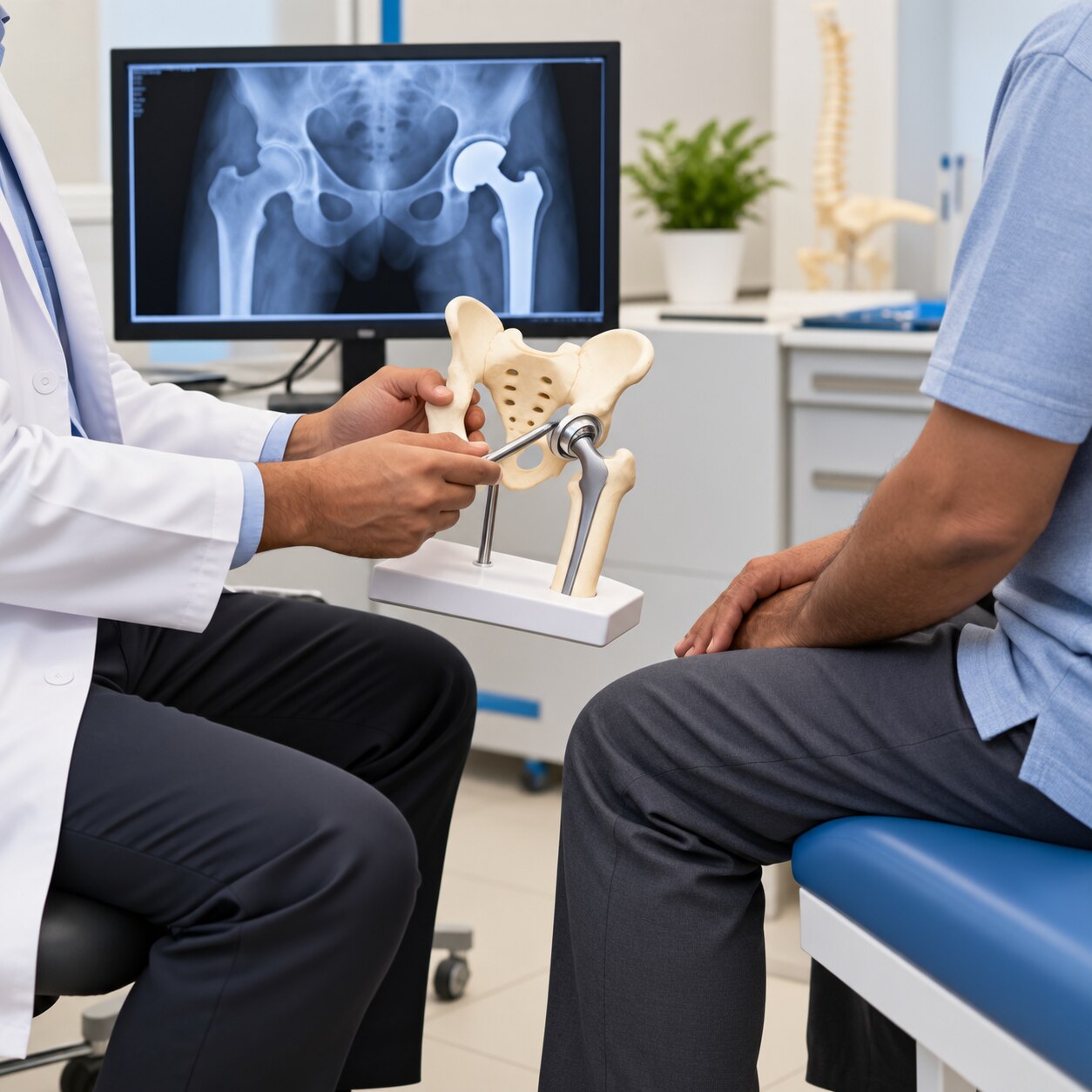
Hip replacement begins well before the operation: your surgeon must confirm that the hip—not the spine or another structure—is causing your symptoms and check that you are fit for anaesthesia and surgery. By the end, you will understand each stage from preoperative assessment and implant placement to walking, discharge and choosing the right care team.
Key takeaways
- Standing hip X-rays help confirm joint damage and rule out other pain sources.
- Ask who will provide anaesthesia and monitor you throughout the operation.
- The surgeon removes damaged bone and inserts metal, ceramic or polyethylene components.
- Plan for assisted walking, wound checks and prescribed rehabilitation after surgery.
How your surgeon decides whether hip replacement is appropriate
An orthopedic surgeon in Baner first confirms that the hip—not the lower back, sacroiliac joint or another source—is causing your symptoms. The consultation covers pain, walking ability, hip range of motion, sleep disruption, daily activities, medicines and medical conditions, followed by standing hip X-rays.
An X-ray finding alone does not justify replacement; persistent pain and loss of function after appropriate nonsurgical treatment are central to the decision.
Before admission, your orthopedic specialist in Baner completes this checklist:
- Review your medical history, previous treatments, medicines and allergies, then perform a physical examination.
- Order blood tests and, when indicated, an ECG, chest evaluation or medical clearance.
- Control diabetes and anaemia before surgery; address smoking, obesity, heart disease and lung disease.
- Make a plan for blood-thinning medicines. Do not stop them without instructions.
- Treat dental infection and check for skin infection or other active infection.
- Postpone surgery for active infection, untreated dental infection, uncontrolled illness, or pain coming from the back, sacroiliac joint or another source.
Before admission, ask when to stop eating and drinking, which medicines to take on the morning of surgery, and when fasting begins. Resolve questions about the implant, anaesthesia, risks, expected recovery, rehabilitation, wound care and who to contact after discharge. Read the consent form carefully; signing it should follow a clear discussion, not replace one.
What happens when you arrive: checks, anaesthesia and the operating team
At admission, the nurse confirms your name, date of birth, planned hip and procedure, then checks the signed consent form. Your medication list is reviewed, including anticoagulants, allergies and the last dose taken. The team verifies fasting, records blood pressure, pulse, oxygen level and temperature, and marks the operative side.
Before incision, you receive antibiotic prophylaxis if prescribed, with allergy and timing checks.
The anaesthetist chooses spinal or general anaesthesia after reviewing your medical history, anticoagulant use, examination and test results. Spinal anaesthesia numbs the lower body; you remain awake or receive sedation, and pressure, movement or pulling can still be felt. General anaesthesia makes you unconscious: you fall asleep and wake in the recovery area.
A urinary catheter is not automatic; the team decides based on bladder function, operation length and medical need.
| Anaesthesia | What you experience | Main decision factors |
|---|---|---|
| Spinal | Lower-body numbness; awake or sedated; pressure may be felt | Medical history, anticoagulants and anaesthetist’s assessment |
| General | Unconscious during surgery; waking in recovery | Medical history and anaesthetist’s assessment |
The orthopaedic surgeon performs the replacement and leads the operation. The anaesthetist manages breathing, blood pressure and pain; nurses prepare instruments, medicines and records; surgical assistants support exposure and closure; the scrub and circulating teams maintain sterile technique and coordinate the operating-room handover.
An orthopedic surgeon in Baner for hip replacement, including a hip replacement surgeon Baner, should explain this plan before admission.
What the surgeon does inside the hip joint
The surgeon makes an incision over the hip, then moves through the selected tissues to expose the joint. The damaged femoral head is removed, the femoral canal is shaped to receive the stem, and the acetabulum is reamed to remove worn cartilage and create a circular surface.
A metal cup is placed in the acetabulum, followed by a polyethylene or ceramic liner. The surgeon inserts the femoral stem, attaches the ball, and temporarily reduces the hip to test movement, stability, leg length and component position. After final checks, the tissues and skin are closed.
Total hip replacement replaces both joint surfaces: the femoral head with a stem and ball, and the socket with a cup and liner. Hip resurfacing preserves more femoral bone by capping the existing head with metal while replacing the socket, but it suits only selected patients.
| Fixation | How it works |
|---|---|
| Cemented | Bone cement anchors the cup, stem or both immediately. |
| Uncemented | A porous implant surface allows bone to grow onto it for fixation. |
| Hybrid | One component uses cement and the other relies on bone growth. |
| Approach | Main trade-offs |
|---|---|
| Anterior | Passes between front tissues and may disrupt fewer major muscles, but anatomy and wound risks still matter. |
| Lateral | Gives strong exposure but can involve abducting muscles and temporary weakness. |
| Posterior | Offers familiar access but may require precautions against deep flexion, leg crossing and twisting. |
No approach is best for everyone. A hip replacement surgeon in Baner matches the route to your anatomy, surgeon training and implant plan. Even after careful balancing, apparent inequality can persist from pelvic tilt, muscle tightness or the necessary compromise between equal length and stability. An orthopedic specialist in Baner should explain these trade-offs.
What happens immediately after surgery and during early recovery
After surgery, staff transfer you to a recovery area, where they monitor blood pressure, pulse, oxygen level, breathing, alertness and the operated leg. Nurses treat pain with prescribed medicines, often combining oral drugs with other methods, then begin clot prevention through early movement and a selected drug or mechanical option.
An orthopedic surgeon in Baner for hip replacement should explain that aspirin, an anticoagulant, intermittent compression devices or compression stockings are not one universal combination. The choice depends on your bleeding risk, clotting risk, mobility and medical history.
A physiotherapist may help you stand on the day of surgery or the next day. Early sessions cover:
- Getting out of bed and sitting safely
- Bed, chair and toilet transfers
- Walking with a walker or crutches
- Gait practice and hip-strengthening exercises
Walking early does not mean the joint has healed; strength, balance and endurance improve over several months. Discharge depends on oral pain control, safe toilet and bed transfers, a walking plan and available home assistance—not a fixed hospital stay.
An orthopedic clinic Baner should provide approach-specific precautions, such as avoiding deep flexion, crossed legs or twisting when instructed.
Swelling, bruising, constipation from opioid medicine, temporary anaemia and poor sleep are common early problems. Seek urgent assessment for fever, increasing wound drainage, calf swelling, chest pain or sudden breathlessness. Resume low-impact activities such as walking, cycling or swimming gradually after clearance; running and repetitive jumping are often discouraged.
How to compare an orthopedic surgeon and clinic in Baner
Choose the surgeon and care pathway, not the clinic name alone. Use this checklist during consultation:
- Ask who will perform the operation, where it will take place, and which anterior, lateral or posterior approach and cemented, uncemented or hybrid fixation are proposed.
- Ask for the implant system, cup and stem type, and bearing surface, such as ceramic-on-polyethylene or metal-on-polyethylene.
- Ask how the surgeon manages leg-length concerns, dislocation, infection, blood clots and possible revision surgery.
- Confirm what physiotherapy, wound review, medication instructions and follow-up are included, plus the telephone number or person to contact after discharge.
| Question | What a useful answer covers |
|---|---|
| Who operates? | The named surgeon’s training, role and hospital privileges |
| Which implant? | System, fixation, bearing surface and reason for selection |
| What happens if problems arise? | Prevention and treatment plans for infection, clots, dislocation, leg-length difference and revision |
| What happens after discharge? | Physiotherapy schedule, wound check, medicines, precautions and named contact |
Searches such as orthopedic clinic Baner, orthopedic surgeon Baner, orthopedic specialist Baner and hip replacement surgeon Baner show location-based intent. They do not prove specialist training, hospital privileges or experience with your risk profile.
At Latkar Multi-speciality Clinic in Pune, assess whether the orthopaedic consultation, surgical planning, rehabilitation and follow-up answer these questions; treat the clinic name as a starting point, not a substitute for individual credentials and a clear risk discussion.
Related products
 | Hip Replacement Surgeon If you are thinking to undergo hip replacement surgery, then you must explore different aspects related to this surgery. View product → |
 | Joint Replacement In Nagpur- Dr Romil Rathi Joint Replacement - Dr Rajendra Latkar Joint Replacement In Aundh Total Knee Replacement Surgery Healthy knees are mandatory to carry out everyday activities in a smooth manner as knee is... |
Frequently asked questions
How does an orthopedic surgeon decide whether hip replacement is appropriate?
The surgeon matches your pain, walking difficulty, restricted hip movement and daily limitations with examination findings and standing hip X-rays. They also check whether the lower back, sacroiliac joint or another condition is causing the symptoms.
What happens when you arrive for hip replacement surgery?
The team confirms your identity, procedure, medical history, medicines, allergies and test results. An anaesthetist discusses spinal or general anaesthesia, and the operating team prepares and monitors you throughout the procedure.
What does the surgeon do inside the hip joint?
The surgeon removes the damaged femoral head, prepares the socket and places replacement components. The implant usually includes a stem and ball on the thighbone side and a cup with a bearing surface in the pelvis.
What happens immediately after hip replacement surgery?
Staff monitor your breathing, circulation, pain and wound in recovery. You begin assisted movement, receive exercises and learn precautions, walking support and follow-up instructions before discharge.
How can you compare an orthopedic surgeon and clinic in Baner?
Ask about the surgeon’s experience with hip replacement, who provides anaesthesia, implant details, infection-control procedures, rehabilitation support, emergency access and follow-up arrangements.
Keywords