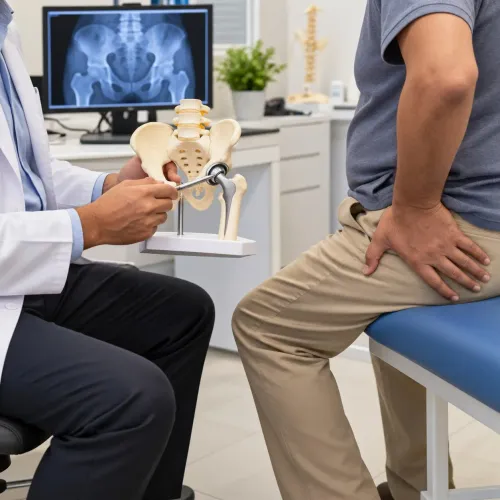
Dr Rajendra latkar is well known as a Common Fractures.
HOW IT HAPPENS
Fractures can happen in a variety of ways. Most fractures are due to trauma, while others are due to pathological conditions or overuse. Trauma can vary from high-energy injuries such as motor vehicle accidents to low energy injuries such as simple falls.
TYPES OF FRACTURE
Open or compound fracture – the skin overlying the fracture is also broken.
Comminuted fracture – the bone is broken into multiple pieces.
Avulsion fracture – a muscle or ligament pulls the bone away, fracturing it.
Fracture Dislocation – when a fractured bone is associated with a dislocation of a joint.
Pathological fracture – a fracture through bone weakened by an underlying condition – e.g. cancer, osteoporosis.
Stress fracture – a fracture due to overuse repetitive stresses and strains.
INVESTIGATION AND TREATMENT
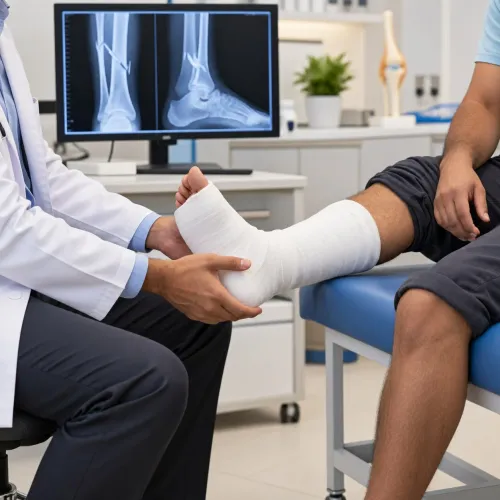
The human body heals fractures by forming a blood clot that calcifies, connecting the broken pieces of bone. For a good recovery, the bones must be held in the correct position and protected while healing occurs. This may be simply by a plaster, or if the fracture is displaced, surgery may be needed to put the bone back into the correct position for adequate healing to occur. Fractures that do not heal are called non-unions. Fractures that heal in the wrong position are called mal-unions. Non-unions and mal-unions may require further surgery to be corrected (see limb reconstruction).
Dr Rajendra latkar is well known as a Common Fractures
HOW IT HAPPENS
Fractures can happen in a variety of ways. Most fractures are due to trauma, while others are due to pathological conditions or overuse. Trauma can vary from high-energy injuries such as motor vehicle accidents to low energy injuries such as simple falls.
TYPES OF FRACTURE
Open or compound fracture – the skin overlying the fracture is also broken.
Comminuted fracture – the bone is broken into multiple pieces.
Avulsion fracture – a muscle or ligament pulls the bone away, fracturing it.
Fracture Dislocation – when a fractured bone is associated with a dislocation of a joint.
Pathological fracture – a fracture through bone weakened by an underlying condition – e.g. cancer, osteoporosis.
Stress fracture – a fracture due to overuse repetitive stresses and strains.
INVESTIGATION AND TREATMENT
The human body heals fractures by forming a blood clot that calcifies, connecting the broken pieces of bone. For a good recovery, the bones must be held in the correct position and protected while healing occurs. This may be simply by a plaster, or if the fracture is displaced, surgery may be needed to put the bone back into the correct position for adequate healing to occur. Fractures that do not heal are called non-unions. Fractures that heal in the wrong position are called mal-unions. Non-unions and mal-unions may require further surgery to be corrected (see limb reconstruction).
Dr Rajendra latkar is well known as a Common Fractures
Keywords