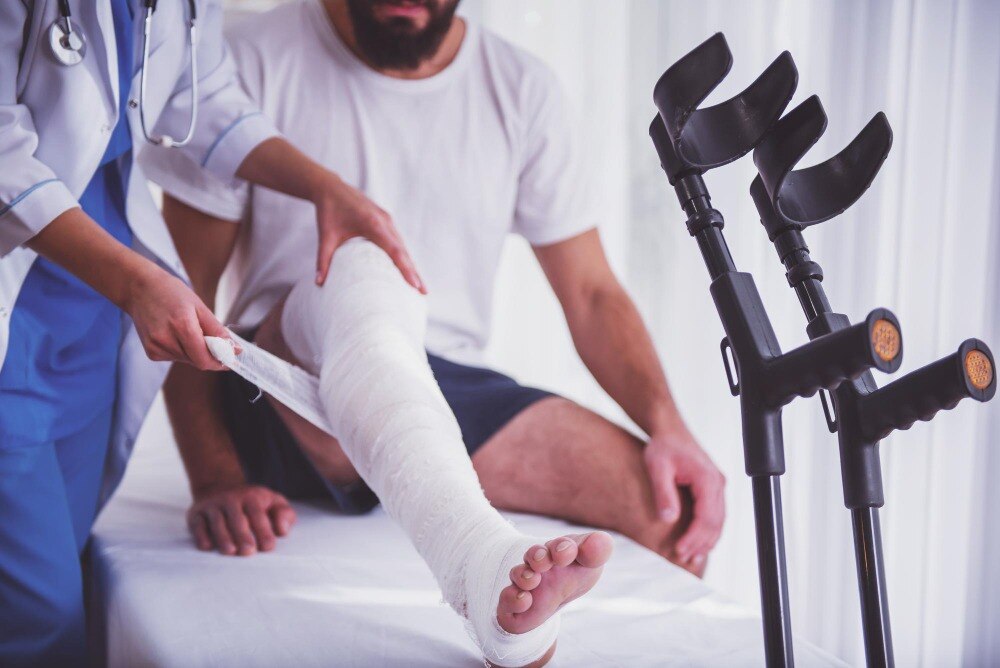
Recovery does not begin when a cast comes off: safe movement, swelling control, muscle activation and protected walking often start while the bone remains immobilised. By the end, you will know how rehabilitation progresses, which exercises and milestones matter, and when a symptom requires your orthopaedic team rather than another home exercise.
Key takeaways
- Recovery moves from protection to controlled loading and normal activity.
- Match exercises to the fracture site, fixation method and weight-bearing instructions.
- Use prescribed home exercises consistently, without forcing painful movement.
- Seek urgent help for worsening pain, numbness, colour change or fever.
What happens during the fracture rehabilitation timeline?
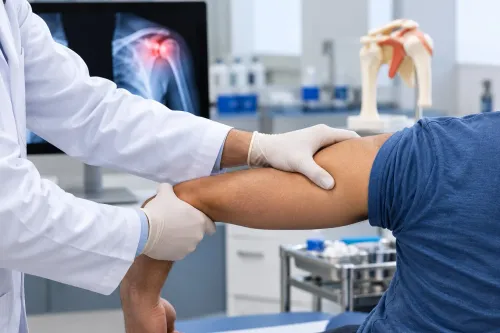
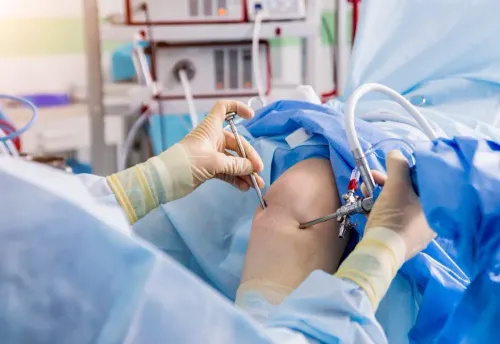
Recovery progresses from protection to controlled use, not from a cast directly to normal activity. During immobilisation in a cast, brace or traction, or soon after plate-and-screw fixation, an intramedullary nail or joint replacement, fracture rehabilitation in Pune may begin with safe movement of unaffected joints, elevation, prescribed hand or ankle pumping and muscle-setting exercises.
Early treatment also teaches you to roll, transfer from bed to chair and use crutches or a walker without loading the injured area beyond the surgeon’s limit. The usual sequence is:
- Protected movement while swelling, pain and fracture stability are monitored.
- Assisted range of motion, using the other hand, a strap or therapist support.
- Active movement, followed by progressive strengthening once healing and examination allow it.
- Balance drills, gait training and task-specific practice such as stairs, bathing, lifting or work movements.
Bone union and functional recovery are different milestones. An X-ray can look improved while weakness, stiffness, poor balance or altered walking remains. Driving, work, sport and heavy lifting depend on examination and safe function, not a calendar date or image alone.
Smoking, vaping and other nicotine exposure can reduce blood supply and slow healing. Eat enough calories and protein; use calcium or vitamin D only when diet, medical history or testing indicates a need. Nutrition cannot replace stable fixation or guided therapy.
How does rehabilitation change by fracture site and treatment?
A wrist fracture and a hip fracture cannot share an exercise plan because the injured tissues, fixation and safe loading differ. Rehabilitation starts during protection, not only after a plaster, cast or brace comes off.
| Site | Main rehabilitation focus | Key restriction |
|---|---|---|
| Wrist or forearm | Finger movement, forearm rotation and staged grip recovery | Do not force rotation or gripping before healing and fixation permit it |
| Elbow or shoulder | Preventing stiffness through assisted range of motion, then active movement | Protect the repair while avoiding prolonged immobility |
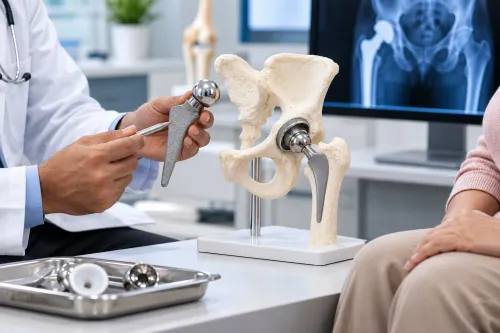
| Hip or pelvis | Bed mobility, transfers, gait training, balance and leg strength | Follow the prescribed non-, touch-down, partial or full weight-bearing level |
| Ankle or tibia | Swelling control, ankle movement, gait retraining and balance | Early loading can disturb alignment or stress an intramedullary nail |
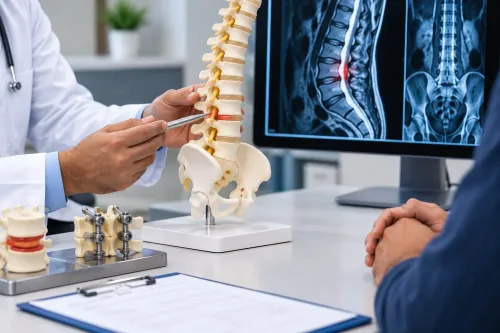
| Spine | Surgeon-directed positioning, safe transfers and trunk or leg conditioning | Avoid unsupervised bending, twisting or lifting |
After traction, a plate-and-screw fixation, intramedullary nail or joint replacement, the plan combines protected movement, muscle activation, mobility-aid training and later strengthening. A useful fracture recovery treatment in Pune advances exercises from symptoms and examination, not a fixed calendar.
The physiotherapist checks the fracture pattern, alignment, fixation stability, bone quality, follow-up X-rays, pain, swelling and the surgeon’s written instructions before changing activity. That evidence determines when movement, touch-down, partial or full weight-bearing is safe; reduced pain alone does not.
Which exercises, session schedule and home tasks support recovery?
Your home plan starts before the cast or brace comes off. Finger and toe movements, quadriceps or gluteal muscle-setting, safe joint mobility, elevation, and breathing or circulation exercises limit stiffness and deconditioning without disturbing the fracture.
| Stage | Exercises and practice | Main purpose |
|---|---|---|
| Early protection | Unaffected-joint movement, assisted range of motion, muscle-setting, hand or ankle pumps | Control swelling and preserve activation |
| Progressive movement | Active range of motion, then light resistance prescribed by your therapist | Restore movement and strength |
| Functional recovery | Balance drills, stair practice, gait retraining and task-specific resistance | Improve walking and daily independence |
Sessions may be more frequent after surgery or when mobility is severely limited, then spaced out as your home programme becomes reliable. Your fracture pattern, fixation, X-rays, pain, swelling and written weight-bearing restriction determine the schedule—not a fixed calendar.
Complete short, repeated home sessions rather than forceful stretching. Practise bathing, dressing, cooking, desk work and safe use of crutches or a walker with occupational or physiotherapy guidance. This practical work is central to fracture care after treatment in Pune.
Your team should track movement range, swelling, strength, walking quality, balance and daily function. Worsening stiffness or persistent weakness needs reassessment for tendon problems, malunion, infection or complex regional pain syndrome. Do not advance resistance or weight-bearing without updated instructions.
What is normal during recovery, and which symptoms need urgent help?
Muscle wasting, stiffness and fatigue are expected after immobilisation or surgery because the limb has done less work. Soreness after a new exercise is acceptable when it settles, while swelling should gradually improve with elevation, prescribed hand or ankle pumping and clinician-approved compression.
Do not force a stiff joint or improvise compression if circulation is impaired or your clinician has prohibited it.
| Experience | More consistent with rehabilitation | Needs urgent help |
|---|---|---|
| Muscle size or movement | Gradual wasting and stiffness after a cast, brace or operation | Sudden loss of function or a new deformity |
| Exercise response | Mild soreness or tiredness that settles with rest | Sharply increasing pain or pain out of proportion to the injury |
| Swelling | Gradually reducing swelling with elevation and approved exercises | Severe, tight swelling, new numbness or weakness |
| Fingers or toes | Normal colour, warmth and sensation | Pale, cold or blue digits, suggesting circulation or nerve compromise |
| Wound or cast | Expected healing under instructed care | Wound drainage, fever, or a cast that is damaged, wet or suddenly tight |
| Leg or breathing | Mild activity fatigue | Calf swelling or pain, chest pain or sudden breathlessness |
Stop exercising and urgently contact the orthopaedic surgeon after a fall, new deformity, sudden loss of function or sharply increasing pain. These warning signs can indicate compartment syndrome, infection, deep-vein thrombosis, pulmonary embolism or threatened circulation. No home exercise can manage them; seek emergency care for chest pain or sudden breathlessness.
Good fracture care after treatment in Pune includes clear instructions for cast, wound and follow-up problems.
How can you choose coordinated fracture rehabilitation in Pune?
Choose fracture rehabilitation in Pune by testing the handover between rehabilitation and orthopaedic care, not by comparing exercise lists alone. Ask who will review the fracture if pain, swelling or function worsens, and who can change the plan after a new X-ray.
- How are touch-down, partial or full weight-bearing restrictions updated after imaging?
- Where are range of motion, strength, walking quality, swelling and daily tasks recorded?
- How does the physiotherapist communicate with the treating orthopaedic surgeon?
- What is the escalation route after a fall, wound problem, new numbness or sudden loss of function?
| Additional service | When it matters | What to confirm |
|---|---|---|
| Occupational therapy | Bathing, dressing, cooking, work or household tasks remain difficult | Whether training uses your home and job demands |
| Gait and mobility training | Hip, pelvis, knee, ankle or tibia injury affects walking | Which aid and weight-bearing level are authorised |
| Psychological support | A road crash, head injury or multiple fractures cause fear, sleep problems or distress | Whether referral is available alongside physical care |
| Bone-health and falls assessment | An older adult sustains a low-impact hip, wrist or vertebral fracture | Assessment of osteoporosis, vision, footwear, balance and home hazards |
Complex trauma rehabilitation in Pune may also need coordination for head or nerve injuries, and nicotine use deserves discussion when healing is delayed. Latkar Multi-speciality Clinic is a Pune option for orthopaedic assessment alongside rehabilitation; confirm its fracture review route, follow-up imaging plan and postoperative exercise restrictions before starting.
Frequently asked questions
What happens during the fracture rehabilitation timeline?
Rehabilitation progresses through protection, restoring joint movement, rebuilding strength, controlled weight-bearing and a gradual return to daily activities. Your timeline depends on the fracture, treatment and healing seen on follow-up imaging.
How does rehabilitation change by fracture site and treatment?
A wrist fracture focuses on finger, wrist and forearm movement, while a leg fracture involves hip, knee, ankle and progressive weight-bearing. Casts, braces, plates, screws, nails and joint replacement each have different movement and loading restrictions.
Which exercises, session schedule and home tasks support recovery?
Your plan may include movement of unaffected joints, elevation, hand or ankle pumps, muscle-setting exercises, supervised range-of-motion work, strengthening and walking practice. Follow the prescribed frequency and complete home exercises without exceeding pain or weight-bearing limits.
What symptoms need urgent help during fracture recovery?
Seek urgent medical advice for rapidly increasing pain or swelling, numbness, tingling, pale or blue fingers or toes, a cold limb, inability to move the digits, wound discharge, fever or sudden calf pain with breathlessness.
Keywords