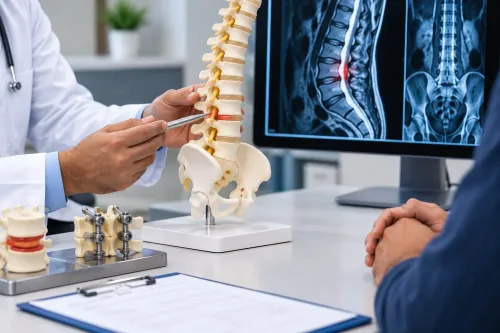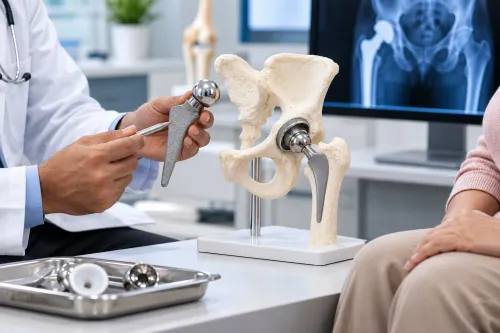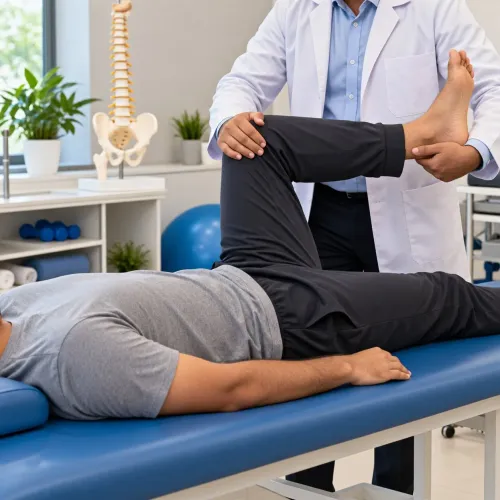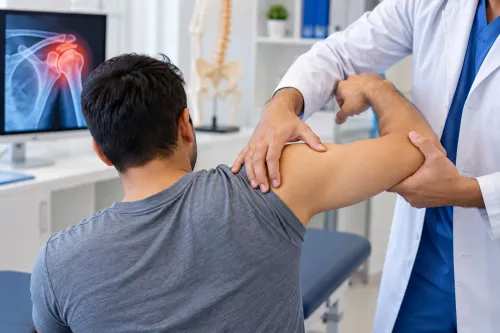
Persistent swelling, locking, instability, painful clicking or loss of motion deserves more than a scan-based surgery decision. By the end, you will know which symptoms point towards a treatable joint problem, when rehabilitation is the better first step, and what to compare before choosing an arthroscopy provider in Pune.
Key takeaways
- Seek assessment for locking, instability, recurrent swelling or lost knee motion.
- Arthroscopy helps repair selected injuries, not every source of knee or shoulder pain.
- Shoulder recovery depends on whether the surgeon repairs bone, tendon, labrum or cartilage.
- Compare diagnosis, rehabilitation plans, surgeon experience and recovery demands before choosing surgery.
Which Ongoing Knee or Shoulder Symptoms Need a Sports Orthopaedic Assessment?
Persistent symptoms justify a sports orthopaedic assessment when they disrupt movement, training or sleep—not because every ache requires surgery. For the knee, seek assessment for locking, catching, recurrent swelling, instability, pain during pivoting, or failure to regain full motion.
For the shoulder, seek it for repeated dislocation, painful clicking, weakness, lost overhead movement, night pain, or failure to return to throwing.
| Joint | Symptoms that warrant assessment | What the clinician must clarify |
|---|---|---|
| Knee | Locking, catching, swelling, giving way, pivot pain, restricted motion | Meniscus, ligament, cartilage, patellar tracking, or another cause |
| Shoulder | Dislocation, clicking, weakness, limited overhead reach, night pain, failed throwing return | Labrum, rotator cuff, instability, stiffness, or tendon injury |
The decision combines how the injury happened, your sport, and a sport-specific examination. Expect range-of-motion and strength testing, stability tests, and imaging rather than an MRI verdict alone. X-rays show fracture, alignment, arthritis, or bone loss. MRI assesses menisci, cartilage, ligaments, labrum, and rotator cuff; ultrasound can dynamically assess some rotator-cuff and tendon problems.
An MRI abnormality does not prove arthroscopy will relieve pain: meniscal changes and cartilage wear can be incidental. Arthroscopy for athletes in Pune is worth discussing when symptoms, examination findings, and imaging identify a treatable intra-articular problem. Persistent pain without that match may need rehabilitation, load modification, or another diagnosis instead.
When Arthroscopy for Knee Injuries in Pune Can Help—and When It Is the Wrong Tool
A displaced or repairable meniscus tear, a locked knee, loose cartilage or bone fragments, selected ACL injuries, focal cartilage damage and patellar instability can make arthroscopy useful for athletes. The case is strongest when symptoms, examination and imaging identify a treatable problem inside the joint.
- A displaced meniscus tear that blocks motion or causes catching
- A locked knee that cannot fully bend or straighten
- Loose fragments causing repeated catching, swelling or sudden pain
- A selected ACL injury requiring reconstruction, often after instability assessment
- A focal cartilage lesion causing symptoms
- Recurrent patellar dislocation linked to treatable instability
Meniscal treatment involves a real trade-off:
| Option | Benefit | Cost |
|---|---|---|
| Meniscal repair | Preserves more load-distributing tissue | Slower rehabilitation, with risks of non-healing or later reoperation |
| Partial meniscectomy | Removes an unstable fragment and can speed early recovery | Sacrifices meniscal tissue and may increase future joint loading |
Arthroscopy for knee injuries in Pune is the wrong tool for pain from advanced osteoarthritis, diffuse pain without a structural lesion, untreated weakness, poor movement mechanics, patellofemoral pain, some chronic tendon pain and mild degenerative disease. Debridement and lavage do not reliably treat degenerative knee arthritis.
For non-displaced meniscal injuries and these pain patterns, start by addressing the cause. Rest, load modification, bracing, medication, injections and structured exercise can improve symptoms without removing or repairing tissue. An MRI abnormality alone does not prove that arthroscopy will relieve pain; meniscal changes and cartilage wear can be incidental.
What Shoulder Arthroscopy Can Repair, and Why Recovery Depends on the Structure
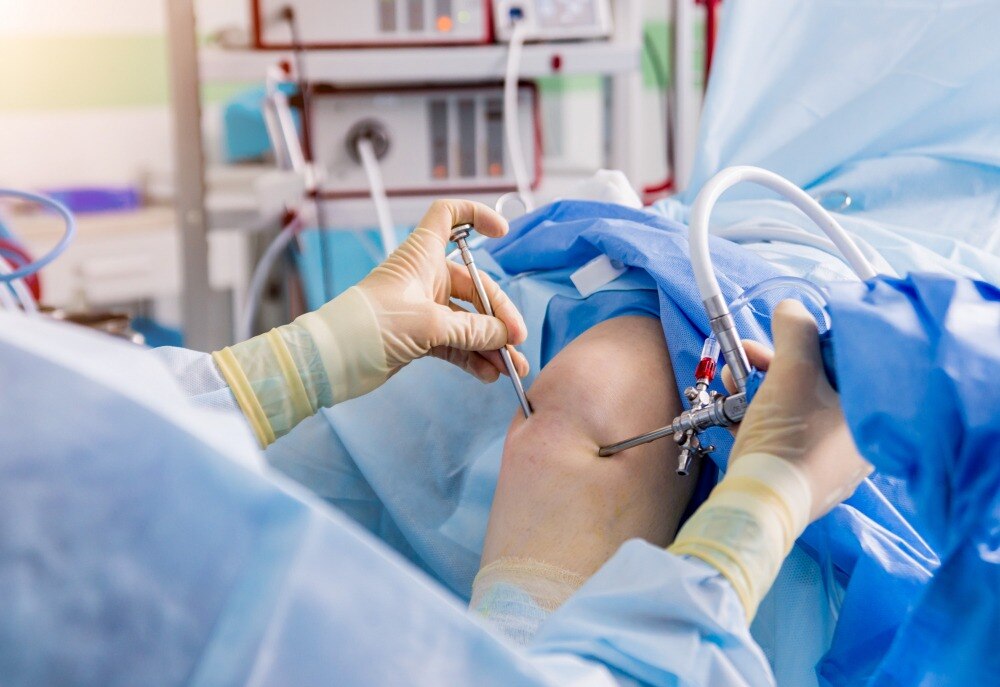
Small skin portals do not define a small recovery. Arthroscopy describes how the surgeon enters the joint, not what is repaired, removed or released.
Shoulder arthroscopy in Pune may address recurrent instability with a labral injury, selected rotator-cuff tears, subacromial problems, loose bodies and some stiff shoulders. The operation could involve:
- Repairing a torn labrum and tightening or stabilising the capsule after repeated dislocation.
- Repairing a rotator cuff when the tear, weakness, tissue quality and sporting demands support repair.
- Removing a loose bone or cartilage body that causes catching or painful clicking.
- Treating selected impingement or subacromial problems.
- Releasing scar tissue in a stiff shoulder when rehabilitation has not restored movement.
For a symptomatic full-thickness rotator-cuff tear, physical therapy can improve patient-reported outcomes; surgery is not automatic. Tear size, muscle atrophy, fatty infiltration, measurable weakness and the demands of your sport influence the choice.
Protecting a repaired tendon, capsule or labrum can restrict throwing, contact sport and heavy shoulder loading long after an outpatient stay. Painful clicking, weakness or night pain that persists despite appropriate rehabilitation deserves reassessment, especially when you still cannot regain overhead movement or return to throwing.
Ask which structure will be repaired and what rehabilitation protects it.
How Doctors Decide Between Rehabilitation, Arthroscopy and Another Operation
The choice depends on whether a named intra-articular lesion explains the athlete’s limitation, not on an MRI abnormality alone. The clinician matches the injury mechanism, symptom pattern, examination and imaging before recommending treatment.
1. Start with rehabilitation when symptoms fit a non-displaced meniscal injury, tendon pain, movement deficit, patellofemoral pain or degenerative disease. Activity modification, physiotherapy, bracing, medication or an injection may address weakness, loading errors and inflammation without removing tissue.
2. Consider therapeutic arthroscopy when a displaced meniscal tear, loose body, repairable cartilage injury, ACL problem, labral tear or instability is blocking function. The planned aim is specific: repair, stabilisation or removal. Arthroscopy is not reliably useful for advanced osteoarthritis or diffuse pain without a structural lesion.
3. Distinguish diagnostic arthroscopy from therapeutic arthroscopy. Diagnostic arthroscopy inspects the joint when important uncertainty remains; therapeutic arthroscopy begins with a planned repair or removal. Ask what happens if the surgeon finds a different tear, cartilage damage or instability, and whether your consent covers changing the procedure.
4. Compare open surgery when the required reconstruction or stabilisation cannot be completed through portals. Ask about infection, bleeding, blood clots, nerve or blood-vessel injury, stiffness and persistent symptoms. Regional or general anaesthesia, outpatient treatment and small portals do not remove rehabilitation.
Latkar Multi-speciality Clinic is one Pune setting where these questions can be discussed during an orthopaedic assessment; an independent second opinion can test whether the proposed sports arthroscopy in Pune matches the findings.
Related product
 | Arthroscopy in pune ARTHROSCOPY Arthroscopy of the Knee Joint The arthroscope is a fiber-optic telescope that can be inserted into a joint (commonly the knee, shoulder and ankle) to... |
What to Compare Before Choosing Sports Arthroscopy in Pune
Choose the procedure that matches a confirmed lesion, not the clinic’s location or the word “arthroscopy.” Ask for the diagnosis and named operation: ACL reconstruction, meniscal repair, partial meniscectomy, labral repair, shoulder stabilisation, rotator-cuff repair or loose-body removal.
| Procedure | Main comparison | Question to ask |
|---|---|---|
| Meniscal repair | Preserves load-distributing tissue but needs slower rehabilitation and can fail to heal | Is repair feasible instead of removing the torn fragment? |
| Partial meniscectomy | May allow faster early recovery but sacrifices meniscal tissue | What long-term trade-off applies to my sport? |
| Labral or rotator-cuff repair | Protects repaired tissue through a longer staged recovery | Which movements and loads must I avoid? |
For sports arthroscopy in Pune, ask how frequently the surgeon treats your specific joint and injury. Confirm hospital arrangements for anaesthesia, infection-control procedures and emergency care, rather than assuming small incisions mean low risk.
Request a written rehabilitation protocol covering:
- When swelling and range of motion should improve.
- When strengthening begins.
- When running, cutting, throwing or contact sport can resume.
- Which strength, movement-control and sport-specific tests are required before return.
Ask what happens if pain persists: another scan, a further rehabilitation phase or an independent second opinion. The best choice for arthroscopy for athletes in Pune reflects the lesion, tissue-preservation options, surgeon experience, time away from sport and recovery demands. Location does not change the indications, risks or rehabilitation requirements.
Frequently asked questions
Which ongoing knee or shoulder symptoms need a sports orthopaedic assessment?
Arrange an assessment when symptoms disrupt movement, training or sleep. Knee warning signs include locking, catching, recurrent swelling, instability, pivoting pain or failure to regain full motion.
When can arthroscopy help with a knee injury?
Knee arthroscopy can help with selected problems such as a repairable meniscus tear, loose body or certain ligament-related injuries. It is the wrong tool when symptoms come from conditions better managed with rehabilitation, medication or another operation.
What can shoulder arthroscopy repair?
Shoulder arthroscopy can repair structures including the rotator cuff, labrum and damaged cartilage, or remove loose tissue. Recovery depends on which structure is treated and whether it is repaired or only cleaned.
How do doctors choose between rehabilitation, arthroscopy and another operation?
Doctors compare your symptoms, examination findings, imaging, injury type, activity goals and response to rehabilitation. They also consider whether arthroscopy can address the actual pain source and whether another operation is more suitable.
Keywords