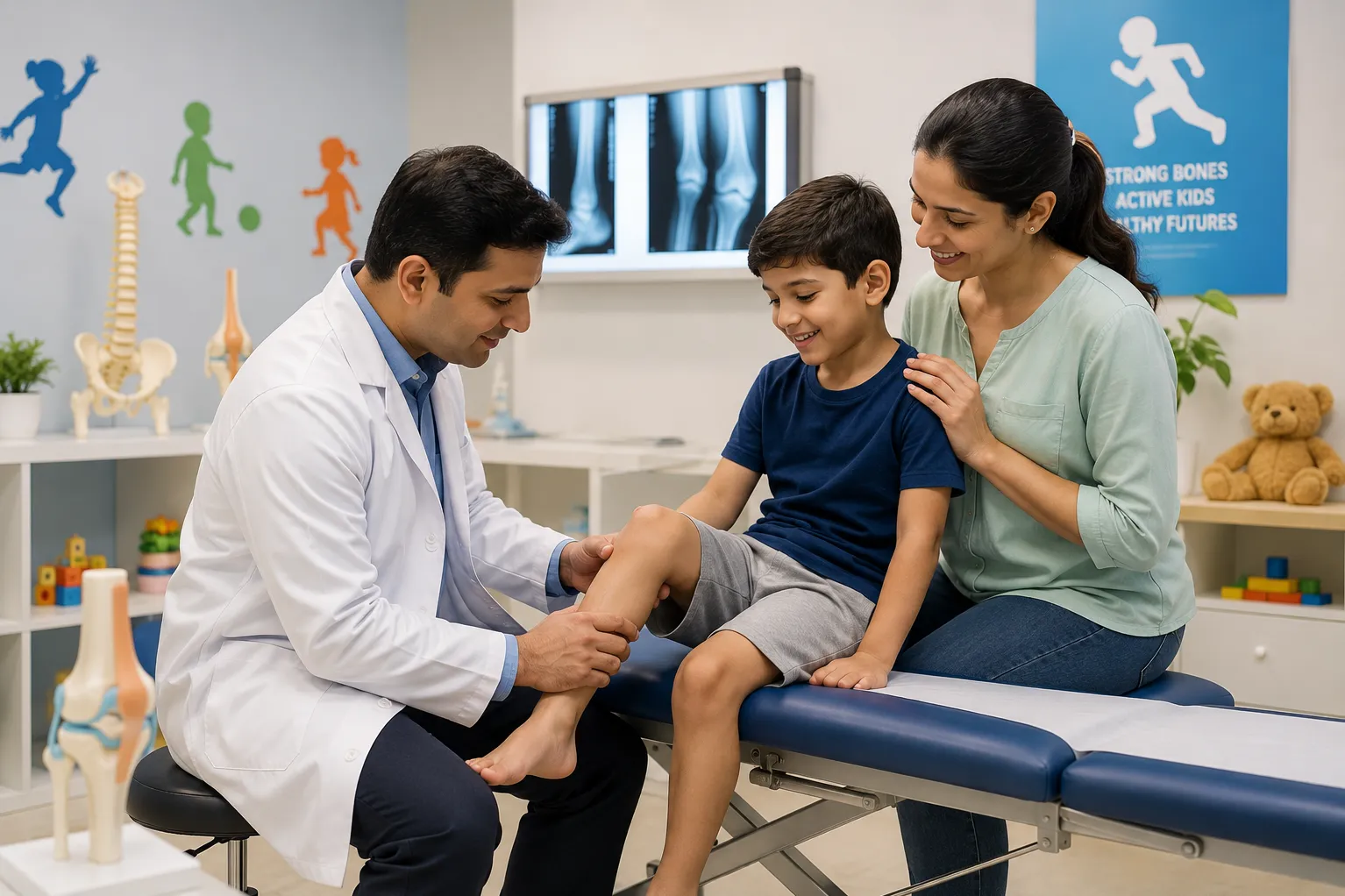
Children are not simply smaller adults when it comes to bone and joint healthcare. Their bones are growing, growth plates remain active, and normal development can produce movement patterns that look unusual to parents. At the same time, genuine orthopedic problems can occur and deserve age-appropriate assessment.
Parents searching for a Pediatric Orthopedic and Bone Care Specialist in Pashan can make better decisions by understanding which concerns require evaluation and what to expect from a pediatric musculoskeletal consultation.
Which Childhood Bone Problems Need Attention
Children frequently experience minor falls, bruises, and temporary muscle discomfort. Many settle without complications.
However, evaluation may be appropriate when a child has persistent pain, visible swelling, difficulty using a limb, repeated limping, reduced movement, or significant discomfort following an injury.
Parents may also seek advice about:
- Walking patterns
- Foot alignment
- Limb position
- Recurrent joint complaints
- Sports injuries
- Suspected fractures
- Posture
- Bone development concerns
The child's age and developmental stage are important when interpreting these symptoms.
Growing Pains and Persistent Pain Are Not the Same
Parents sometimes describe any recurring leg discomfort as growing pain. Yet not every painful symptom during childhood should automatically be attributed to growth.
Pain that consistently affects one location, causes limping, is associated with swelling, follows trauma, or significantly restricts activity deserves medical evaluation.
The clinician may consider the child's medical history, activity level, recent injuries, growth pattern, and physical examination findings before deciding whether further investigation is needed.
What Makes Pediatric Orthopedic Assessment Different
Growth plates are areas of developing tissue near the ends of children's bones. Because these structures contribute to bone growth, certain childhood injuries require different evaluation and management from comparable adult injuries.
Age also affects treatment decisions.
A fracture in a young child may behave differently from the same type of fracture in an adolescent. Similarly, variations in leg alignment or foot position can be normal at one developmental stage but require closer evaluation in another situation.
This is why context matters more than comparing a child's appearance with another child's.
What Parents Should Bring to an Appointment
A little preparation can make the consultation more useful.
Consider bringing previous X-rays or scans, earlier prescriptions, details about previous fractures or injuries, and information about when the symptoms began.
For intermittent problems, parents may find it useful to record when pain occurs or capture a short video of an unusual walking pattern when it is not consistently visible during the consultation.
For sports injuries, explain the activity involved and the exact movement that caused the problem.
Questions Worth Asking
Parents can ask:
- Is this finding expected for the child's age?
- Does the condition need monitoring?
- Are any activities temporarily restricted?
- Is physiotherapy appropriate?
- Does the child need imaging?
- When should the child return for review?
- What symptoms would require earlier reassessment?
Good pediatric orthopedic care should help parents understand both what is happening and what should happen next.
Coordinated Child Healthcare in Pashan
Musculoskeletal health can sometimes intersect with broader pediatric concerns such as growth, nutrition, general development, or physical activity.
Latkar Multi-speciality Clinic provides pediatric and orthopedic services within a multispeciality setting serving families in Pune. This structure can be useful when a child's complaint needs both general pediatric context and focused musculoskeletal assessment.
Pashan and nearby residential areas have families with children participating in school sports, outdoor activities, dance, cycling, and other forms of exercise. Injuries and developmental concerns therefore need to be considered in relation to each child's age and activity.
Parents do not need to assume that every unusual walking pattern or occasional ache represents a serious orthopedic condition. At the same time, persistent symptoms should not simply be dismissed as part of growing up.
An age-appropriate clinical assessment can distinguish normal developmental variations from injuries or conditions that require treatment, monitoring, rehabilitation, or additional investigation.
Keywords