Children develop at different rates, which can make it difficult for parents to know whether a change is simply an individual variation or something worth discussing with a pediatrician. Growth and development are related, but they describe different aspects of childhood health.
A Pediatric Growth and Development Clinic in Balewadi can help parents evaluate physical growth alongside developmental progress rather than relying only on comparisons with other children.
Growth Is More Than a Child's Weight
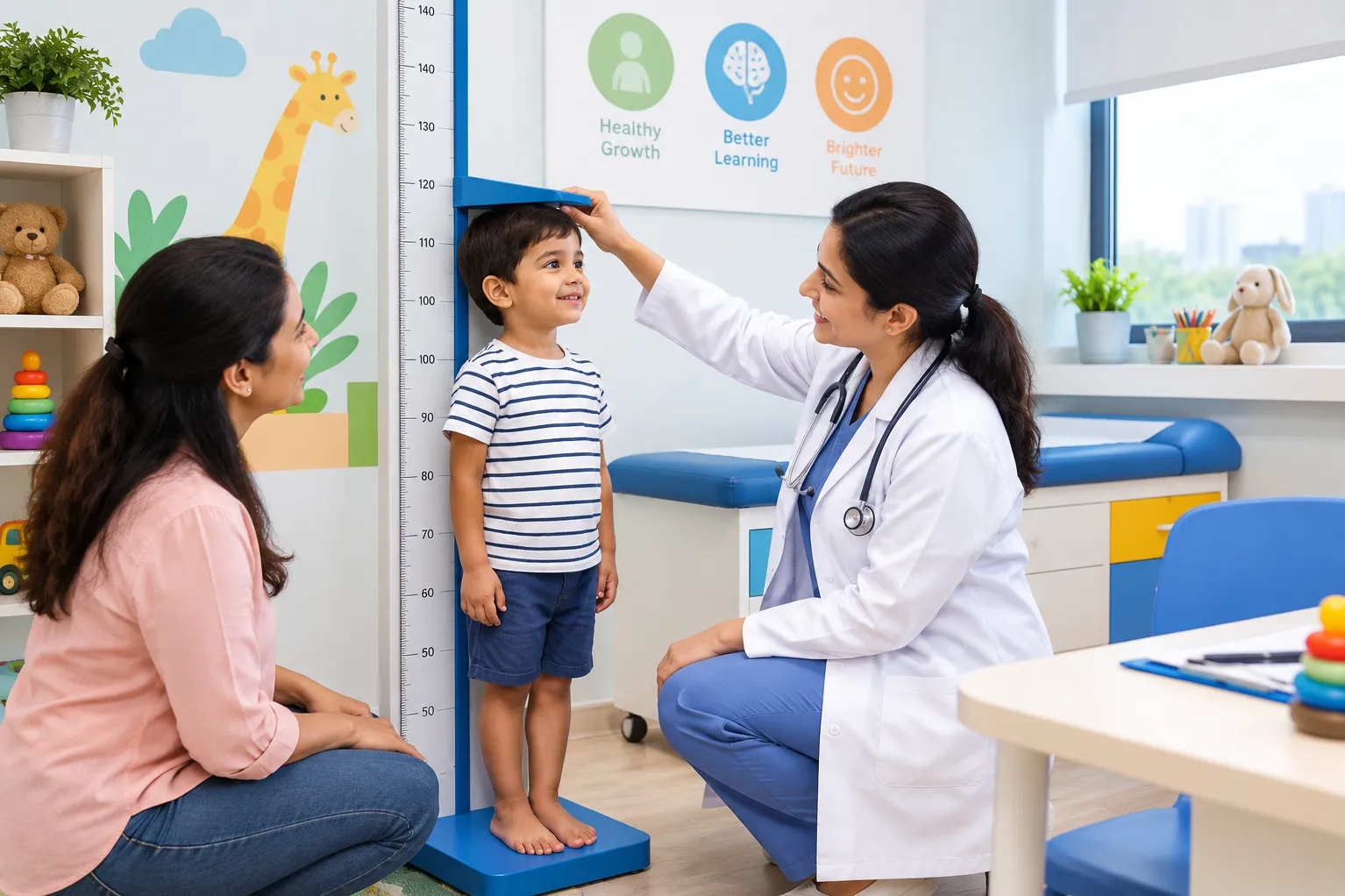
Physical growth commonly includes measurements such as height, weight, and head circumference during relevant stages of infancy and childhood.
One measurement alone provides limited information. Doctors often gain more insight by looking at the child's growth pattern over time.
A child's growth can be influenced by several factors, including genetics, nutrition, overall health, sleep, physical activity, chronic illness, and other medical considerations.
This is why comparing one child directly with a classmate or sibling is rarely a reliable way to assess health.
What Does Development Include
Development describes the progressive acquisition of abilities as children grow.
Doctors and parents may observe areas such as:
- Gross motor skills
- Fine motor skills
- Speech and language
- Social interaction
- Learning
- Behavior
- Everyday functional abilities
Developmental milestones provide useful reference points, but they are not a competition or rigid timetable.
The overall pattern matters. If parents notice that a child is struggling with skills expected for their developmental stage, pediatric assessment can help determine whether monitoring or further evaluation is appropriate.
When Should Parents Discuss Growth Concerns
Parents commonly seek pediatric advice when they notice poor weight gain, changes in appetite, feeding difficulty, unusually rapid or slow growth, or a growth pattern that appears to have changed.
Instead of focusing on a single number, the pediatrician may review previous measurements and assess whether the child is following an expected growth trajectory.
Nutrition, medical history, birth history, recurrent illness, family growth patterns, and developmental progress may also be considered.
Developmental Concerns Should Be Discussed Early
Parents often spend more time observing their children than anyone else. Their observations can therefore provide valuable information.
Concerns worth discussing may include loss of previously acquired abilities, substantial delays in communication or movement, persistent difficulty with age-appropriate tasks, or changes in social engagement.
Raising a concern does not automatically mean that a developmental disorder is present. It allows the child's progress to be evaluated in context.
Preparing for a Growth and Development Visit
Parents can make an appointment more productive by bringing:
- Previous pediatric records
- Vaccination records
- Growth measurements when available
- Birth and neonatal information
- Details of current medications
- Information about diet and feeding
- Notes about developmental concerns
Parents should also describe what they see at home rather than trying to use medical terminology. Practical examples are often more informative.
For instance, explaining that a child frequently struggles to climb stairs or is not using words in the way expected for their age gives the clinician useful context.
Child Healthcare in Balewadi
Balewadi has developed into a prominent residential area of Pune with many young families. Regular pediatric follow-up can provide continuity as children progress through infancy, preschool years, school age, and adolescence.
Latkar Multi-speciality Clinic offers pediatric healthcare within its multispeciality services. Growth and developmental assessment can form part of broader child healthcare alongside nutrition discussions, vaccination planning, illness management, and other pediatric concerns.
Parents should avoid treating growth charts or milestone lists as standalone diagnostic tools. These resources are most useful when interpreted alongside the child's medical history and clinical assessment.
The purpose of growth and development monitoring is not to make every child conform to identical numbers. It is to understand whether an individual child is progressing appropriately and whether any emerging concern deserves additional attention.
Regular pediatric review provides parents with an opportunity to ask questions, track changes over time, and make healthcare decisions based on the child's individual developmental journey.
Keywords